How to Identify Crop and Weed Leaf Stages
Recognition of plant growth stages is essential for effective weed and disease control. Many herbicides and fungicides are safe on a crop only when applied at a specific growth stage. Similarly, weeds are controlled only when they are at certain growth stages.
For most post-emergent products, growth stages are described by the number of leaves. The following is a description of how to count leaves for staging.
Cereals and Annual Grass Weeds
Manufacturers generally use two different systems of staging for grasses. The minimum stages of application are similar, while the later stages may differ.
Some manufacturers use “Total Leaf Count” stages based on the number of leaves on the entire plant, including tillers or secondary shoots. Most recommendations are based on the number of main stem leaves and tillers. Tillers or stools are the secondary shoots or stems of a grass plant. Similar to the branches of a broadleaf plant, tillers will emerge from the axils between the leaf and main shoot. Tillers usually begin to appear at the 3 or 4 leaf stage. When staging a plant in this manner, be sure to identify the tillers first, then count only leaves that originate from the main shoot.
Broadleaf Weeds
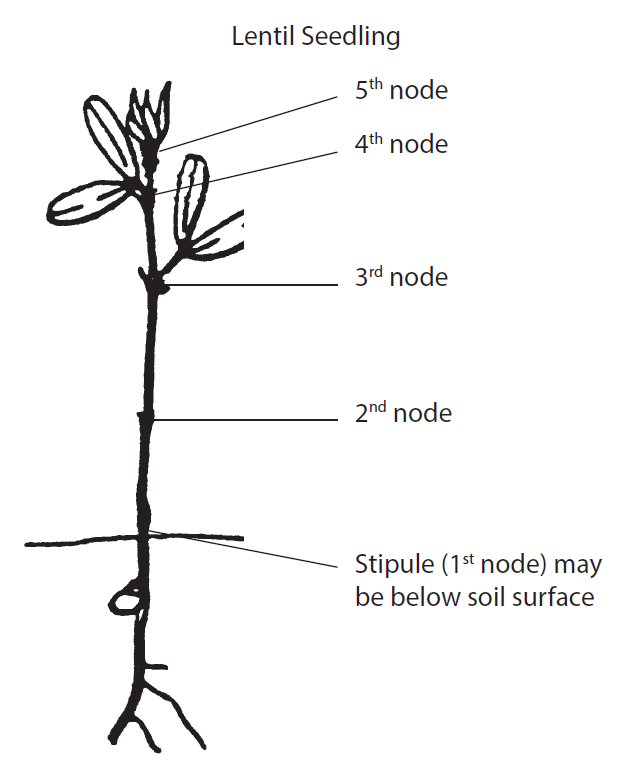
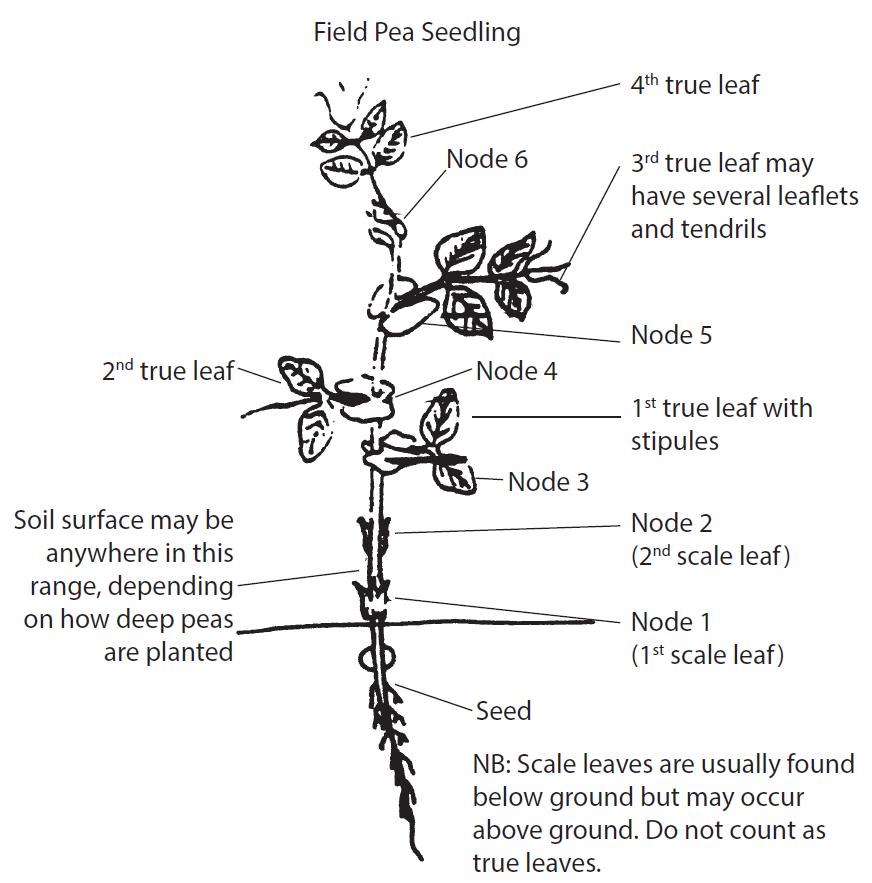
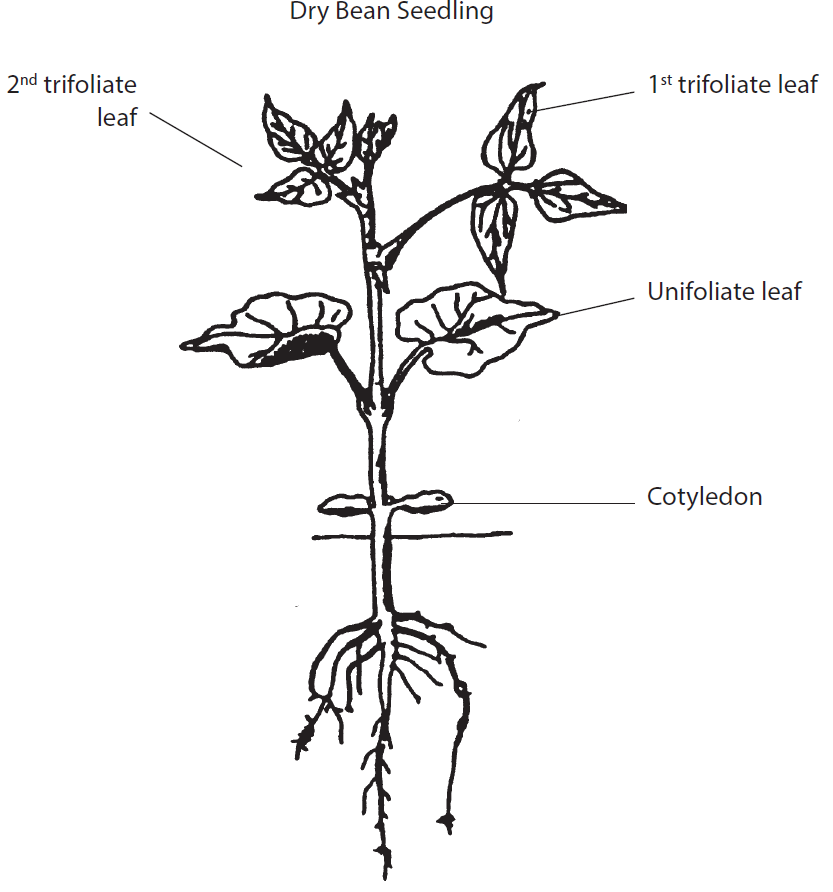
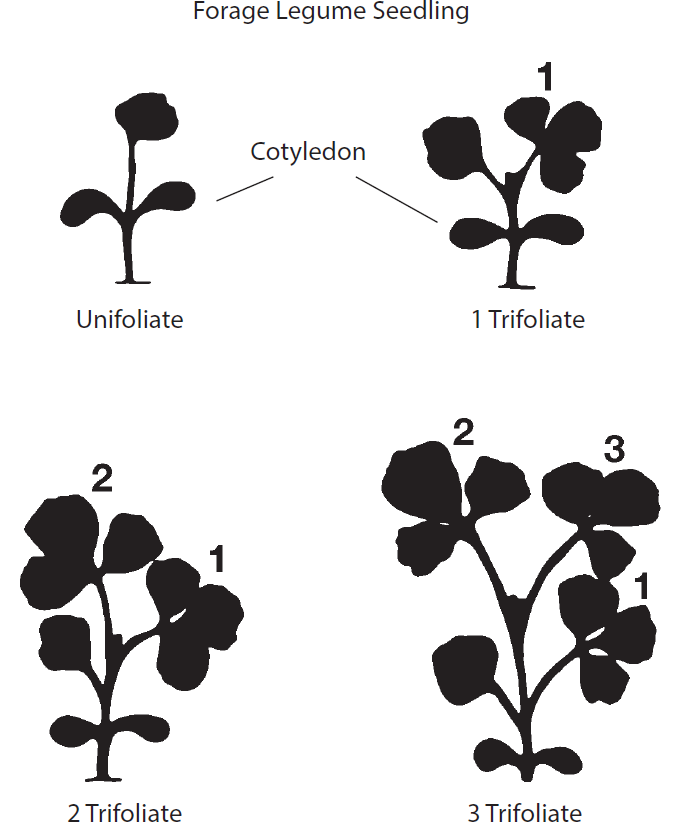
Cotyledons – These are the seed leaves that usually emerge above ground. On some plants, such as faba beans, lentils and peas, they stay below the soil surface. Cotyledons are not true leaves and are not counted when determining leaf number. They are a different shape than the true leaves and may dry up and disappear at an early stage.
Alternate leaves – Some plants have one leaf at each node on the stem. The next leaf emerges at the next higher node and extends away from the stem in the opposite direction. These plants (lamb’s quarters and wild mustard are good examples) are said to have alternate leaves. To determine the leaf stage, simply count the number of leaves present.
| Alternate Leaves | |
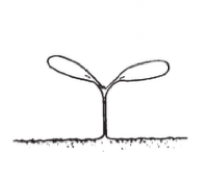 | 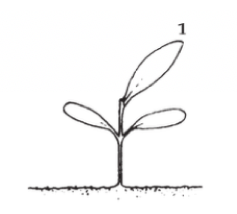 |
| Cotyledon Stage | 1 Leaf Stage |
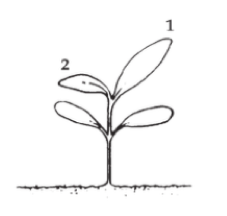 |  |
| 2 Leaf Stage | 4 Leaf Stage |
Opposite leaves – Plants with two leaves at each node, one on each side of the stem, are said to have opposite leaves. The next pair of leaves on the next node are rotated about 45° so that they are not directly over the previous pair. Plants with opposite leaves have even-leaf numbers only. When counting, the leaf number progresses from cotyledons to 2 leaf, 4 leaf, etc. These plants generally appear shorter than plants with alternate leaves at a similar leaf stage. Be sure to count each pair as two leaves. Hemp nettle is a weed that has opposite leaves.
| Opposite Leaves | |
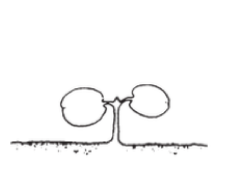 | 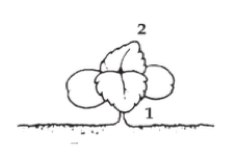 |
| Cotyledon Stage | 2 Leaf Stage |
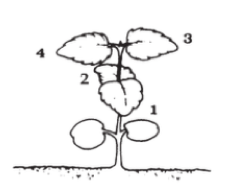 | 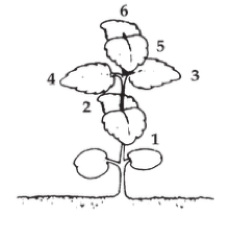 |
| 4 Leaf Stage | 6 Leaf Stage |
Whorled leaves – More complex plants like cleavers may have whorled leaves. These plants have three or more leaves at each node on the stem. The leaf number in each whorl may vary, so be sure to count each individual leaf unless the Guide or label recommendation refers to the number of leaf whorls.
| Whorled Leaves | |
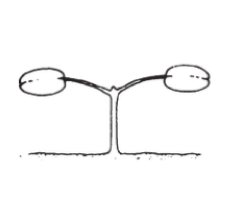 | 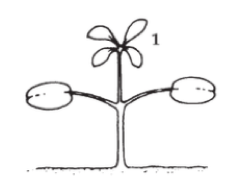 |
| Cotyledon Stage | 1 Whorl Stage |
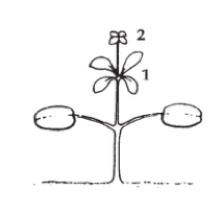 | 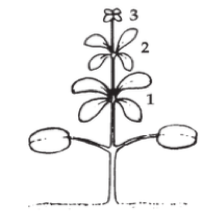 |
| 2 Whorl Stage | 3 Whorl Stage |