
How to Read Product Pages
Pesticide Resistance Group #: This area will list the pesticide active ingredient(s) to the mode of action that ingredient uses.
This field lists the pesticide product name. Where there is only one product the commercial “trade” name is given. Where more than one company sells pesticides with the same combination of active ingredients the “generic” (active ingredient) name is given.
If the active ingredients are all in a common formulation (liquid, granule, etc.) the generic name will appear as ‘Ingredient A/ Ingredient B’ and if the active ingredients are in separate containers to be mixed in the sprayer the names are given as ‘Ingredient A + Ingredient B’.
Company:
This section identifies the company (or companies) that manufacture or market this crop protection product (or generic equivalents) in Canada as well as the PCP# for that (those) product(s). See the Pesticide Use page for more information on PCP numbers. PCP#s are given as ‘(PCP#XXXXX)’ where XXXXX is a four or five digit number unique to that product. In some cases, where there are multiple components with separate PCP numbers, the PCP number will be provided below under ‘Formulation:’
Formulation:
This section gives information on the active ingredient and its concentration in the product as well as information on formulation type and packaging types and configurations. Formulation strength (or concentrations) are given in % by weight for dry formulations and g/L for liquid formulations. PCP numbers may also be give for some products (see above).
Crops and Staging:*
This section indicates on which crops the product may be used and what stage of crop development it should be applied at. Rates may also be included in this section if they vary between crop types or crop stage.
*This section will also indicate which crops are registered under the User Requested Minor Use Label Expansion (URMULE) program. Some companies, as a condition of placing these minor crops on their labels request, that users of their product on these crops do so at their own risk because the registration was approved with information the company did not produce.
These crops will be flagged separately from the main crops.
Pest (Diseases, Insects, Weeds) and Staging:
This section indicates the pests (Diseases, Insects, or Weeds) that are indicated on the product label as controlled or suppressed, as well as any specifics on the timing of application relative to the pest stage if required. Rates may also be included in this section if they differ for different pests or stage of pest.
Rates:
The rates provided in this section are given in the amount of product required per acre and the number of acres treated per package unit where possible. This section will also indicate any adjuvants that are to be used in conjunction with the product and the rate of that adjuvant.
This section will not be present if rates have been integrated into either of the previous Crops or Pest sections.
Application Information:
- Water Volume: This section indicates the minimum carrier water volume to be used to apply the product. Using less than the recommended minimum carrier application volume can negatively affect pesticide performance, particularly with contact pesticides and when using low drift nozzles.
- Nozzles and Pressure: This section indicates if there are any particular nozzles that should or should not be used to apply the product. Pressures indicated reflect those for conventional nozzles. Low drift nozzles may require higher pressures for proper performance. A general statement of “Use nozzles and pressures designed to deliver proper coverage with ASABE ___ droplets” indicating the ideal droplet sizes to allow for the combination of lowest drift potential and best performance from the pesticide. ASABE refers to the American Society of Agricultural Engineers who have set standards a series of droplet measurements (in microns or micrometres) that classify droplet sizes from ‘fine’ to ‘very coarse’.
How it Works:
This section typically refers to the page where a general description of the various modes of action of either herbicide, fungicides or insecticides.
Effects of Growing Conditions:
This section summarizes any adverse conditions that will affect the biological function of the crop or the target pest and therefore possibly impact the product’s performance. In most cases both crop and target pest must be growing or functioning normally for pesticides to provide expected performance and/or crop tolerance. Adverse weather conditions such as extreme heat, cold, drought or flooding can slow or stop the biological processes in the crop or pest. These biological processes in the crop allow the pesticide to be degraded quickly. If biological processes that are attacked by the pesticide, and under normal conditions would kill the pest, are not functioning normally the pest may be able to rid itself of the pesticide before dying and recover from the application.
Tank Mixes:
This section indicates which other pesticides the pesticide label indicates are registered for use as tank mix combinations with this pesticide.
Common mixes may include:
- Herbicides:
- (Subtitles may indicate specific crops or condition restrictions:)
- Insecticides:
- Fungicides:
- Fertilizers:
There may be additional pesticides that are registered but not listed on this product’s label. Other pesticides may have this product listed as a mix option on their labels.
Included in the tank mix section in non-bolded italics may be any precautions against the mixing of pesticides which will have adverse reactions such as crop injury, reduced pest control or unusual increased danger in the use of the product.
Restrictions:
Since most pesticides have a capacity to injure neighboring plants, wildlife or people, they will come with restrictions on their use in order to prevent this unintentional damage. Misuse of pesticides may result in as little as temporary or superficial damage to plants or a slight irritation to the eyes or nose, or could also result in poor performance of the pesticide, severe injury and/or yield loss to very sensitive plants and/or unacceptable residues in agricultural commodities, and/or serious illness or death of non-target organism or people. It is important to comply with product restrictions in order to minimize the impact of the pesticide used on non-target organisms and people. A selection of common restrictions and precautions found on product labels are provided in this section, but it is important to read the label carefully in order to understand how to use the product properly.
- Rainfall: This section indicates the required delay between application and rainfall to avoid reductions in the performance of the product or the unintentional movement of the product.
- Re-entry: This section indicates when it is safe for a person to re-enter treated field following an application of a particular pesticide without the same personal protection used to apply the product.
- Resistance Management: This section highlights products where an increased risk of the target pests developing resistance to the group of products (typically fungicides) has been identified. If no specific risk has been identified the reader is referred to a general resistance section. All pesticides have some risk of the target pest developing resistance. Rotating pesticide groups using as many different resistance groups as possible in the rotation is one way to avoid or delay resistance development.
- Grazing: This section indicates whether and how soon treated crops may be grazed by livestock or otherwise fed to livestock. This restriction is in place to avoid residues of the pesticide from being detected in milk or meat from animals consuming forage, greenfeed or straw from treated crops or forage.
- Pre-harvest interval: Is the time that must be left between application of a pesticide and the harvest of a crop in order to prevent greater than allowable residues of the pesticide in the harvested material. Harvest is the cutting of the crop (i.e. combining or hay cut) or removal of the harvestable material from the plant (i.e. picking fruit or striper header). Maximum Residue Limits (MRLs) are set for commodities based on registered rates and staging of pesticides used in the production of those commodities. Disregarding these intervals can result in residues over the MRLs, which can lead to market disruptions.
- Re-cropping: This section indicates how soon specific crops may be seeded into treated fields. Failure to adhere to these delays could result in injury to the following crop.
- Aerial Application: This section indicates whether the product may be applied by aircraft and any special conditions that may be necessary.
- Labelling: In addition to other precautions and warnings, seed treatment products will also have statements about how seed treated with the product should be labeled.
- Storage: This section indicates how the product must be stored. As a general rule, unused pesticides should always be stored in their original containers in a secure, dry area, away from other pesticides, food or feed.
- Buffer Zones: This section will indicate any setback distances that are required from sensitive aquatic or upland habitats. Newer labels may indicate that these distances are from the downwind edge of the boom but older labels may not. Examples of aquatic habitats are lakes, rivers, sloughs, ponds, prairie potholes, creeks, marshes, streams, reservoirs and wetlands. Examples of terrestrial habitats are grasslands, forested areas, shelter belts, woodlots, hedgerows, riparian areas and shrublands.
In addition to the set back or ‘buffer’ distances indicated on product labels, provincial environment departments may also have additional restrictions or requirements for permits to apply pesticides to or near water. Check with the provincial environment department/ministry for more information.
Tank Cleaning:
This section describes the measures that are required to properly clean out spray tanks. A general overview of sprayer cleaning is given in the Pesticide Use section, but products where there is a high risk of crop damage as a result of very low level contamination of the spray solution, will have specific measures indicated.
Hazard Rating:
This section indicates the relative toxicity of the pesticide, formulations or components. For an explanation of the symbols used here see the Pesticide Use section. An additional symbol that is used that is not a standard symbol is the (!) exclamation mark which indicates an otherwise undefined risk factor (i.e. irritation).
Example:
Caution – Eye Irritant
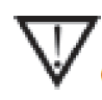
Some older products have not had hazard ratings developed, while other products have very low toxicity and do not have hazard warnings. Even in the absence of a hazard rating users should wear a minimum of nitrile gloves and an apron as well as long sleeved apparel during mixing and avoid unnecessary exposure.