
Insect Control
Additional Resources
For additional information on monitoring, economic thresholds and biological control of insects in field crops, as well as information on insect management in commodities other than those covered in this guide, see the WCCP Guide to Integrated Control of Insect Pests of Crops at http://www.westernforum.org/wccp%20guidelines.html.
Insect Management Decisions
Crop rotations, cultivar selections, and seeding dates can be chosen to reduce the risk of injury from some insects that may be of higher risk to a crop. Management of insects with insecticides should only be considered when numbers or damage exceed economic thresholds. To select an insecticide, verify the registered products for the insect and field crop in the following insect management charts. Consideration should then be given to the preharvest intervals, how the product will be applied, restrictions, precautions and the hazard rating.
Pre-harvest Interval
The pre-harvest interval is the number of days that must pass between the last application of a pesticide and harvest. Harvest is the cutting of the crop or removal of the produce from the plant. It includes direct-combining, cutting (swathing) or grazing; it does not include swath-combining or baling for hay.
Field Scouting
Field scouting is the regular examination of fields to accurately assess the kind and the number of insects, plant pathogens and weeds present and the amount of damage being done. Scouting should be done weekly during the growing season and more frequently when infestations approach economic levels or when weather conditions favour the rapid development of specific pests.
To properly scout for insect pests, you must know when they occur, where they live, what they look like, and how to find and count them. The number of locations to assess in a field will depend on the field size, and any specific pests that may be of concern. Generally a minimum of 5 sites should be sampled, however some insects may require more sites to be sampled to accurately make management decisions.
There are several possible scouting patterns that can be used when checking fields. These options are based on pest distribution and field configuration.
- Pattern 1: Used when pests are uniformly distributed.
- This scouting pattern typically looks like an X, Z or W, excluding field edges. Pests that fit this pattern include aphids, bertha armyworm and diamondback moth.
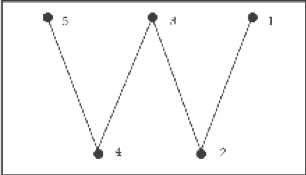
- Pattern 2: Used when pests are generally more abundant at the edges of fields. Scout by walking along field edges, fence lines or ditches. Some examples of when you would include more focused scouting along field edges are to estimate early-season populations of flea beetles, Colorado potato beetles and grasshoppers.
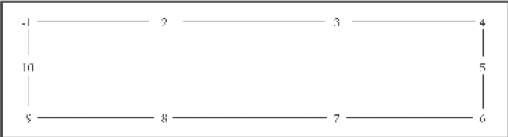
In each area examined, use of a sweep net, if possible, is a good way to determine what potential pests and beneficial insects may be present. This should be followed by examining some plants and the soil surface. More specific counts of a particular type of insect or plant damage may be necessary if they are abundant during the more general scouting.
Economic Thresholds
Monitoring methods, typical symptoms, and economic thresholds or nominal thresholds for the more common crop pests are described in the field scouting section for each commodity. The smallest number of insects (or level of injury) that cause damage equal to the pest management costs is called the economic injury level. The economic threshold is the density of insects (or level of injury) at which control measures should be applied to prevent an increasing population from reaching the economic injury level. Note that factors such as moisture, temperature conditions and stage of crop growth, can increase or decrease the impact of insects on crop production. In some instances, nominal thresholds are presented; these decision guidelines are based on experience rather than research quantifying the impact of the insects on the crop.
Estimating Percent Defoliation
Many economic thresholds for insects are based on percent defoliation of the plants they are feeding on. The following figure may assist in determining the percent defoliation. Although the following photo is of sunflower leaves, this figure can be used to estimate % defoliation for many crops.
 |  |  | 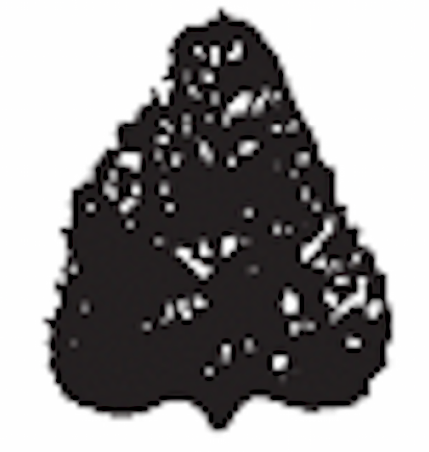 |  |
| 5% | 10% | 15% | 20% | 25% |
 |  |  | 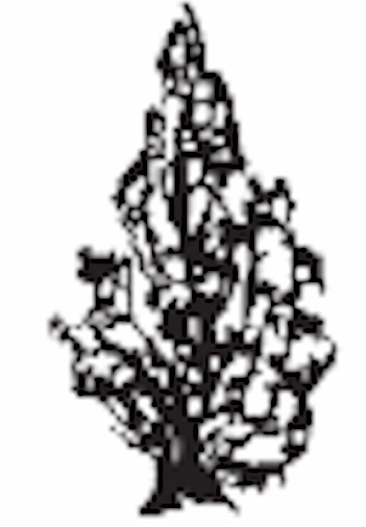 |  |
| 30% | 35% | 40% | 45% | 50% |
Insecticide Poisoning in Humans
Organophosphate (OP) and carbamate insecticides (identified on the Insecticide Groups chart page 592) can pose a serious risk to unprotected persons. Poisonings can occur while mixing, loading and/or during the application of these products without the appropriate protective equipment or measures. These pesticides are readily absorbed through the skin or the lungs, and can act as nervous system toxins. Overexposure can produce symptoms such as headache, nausea, pupil dilation and excessive sweating and salivation. Higher doses may cause breathing difficulties, muscle twitching, weakness and spasms. Very high doses have caused respiratory failure and death.
Both OP and carbamate pesticides inhibit an enzyme called cholinesterase. Measurements of cholinesterase in the blood before and during the application season can indicate harmful exposures to OPs and carbamates. Persons who intend to mix, load and/or apply these types of pesticides repeatedly during a season, need a baseline and repeat measurements. Consult your doctor before the spraying season to arrange for these measurements.
Degree of Risk and Hazard Rating:
(see Pesticide Use page for full description)